If you sell something that costs $2,000 or more, your buyers don't decide on day one.
They think about it, compare, talk to a partner, sit on it for a week, come back, sit on it again, and then maybe buy. That's how longer sales cycles work.
That's also where Facebook breaks down.
Facebook has a 7-day attribution window. Meaning if somebody becomes a lead today but buys after 8 days, Facebook will not record that sale.
This is a limitation from Facebook's side.
The conversion can still show up in your CRM, in Shopify, in your back end. You can even send it back to Facebook as an event.
The algorithm still can't act on it, because it falls outside the window it uses to learn.
That's the gap and every advertiser running longer sales cycles is sitting in it.
Why "qualified lead" became the workaround
Because of the 7-day attribution window limitation, most advertisers reach for the next best thing. They optimize for a qualified lead.
Set up a form, ask qualifying questions, filter out the bad fits, send the qualified ones back to Facebook as a conversion event.
That works to a point. The problem is a qualified lead is not a buyer.
A qualified lead is someone good at answering questions. A buyer is someone who pulled out a credit card.
And when you compound people who answer questions but don't pull out a credit card, Facebook builds a lookalike of that audience because you tagged them as qualified.
So the algorithm gets very good at finding more people who fill out forms and never buy.
Five hundred qualified leads sit in your CRM. Ten of them paid.
Five hundred is the pool Facebook is studying. Ten is the pool paying your bills.
Trace the buyers, find the front-end pattern
Once you have five to twenty actual high-ticket sales, you can do something the ad platform can't do for you.
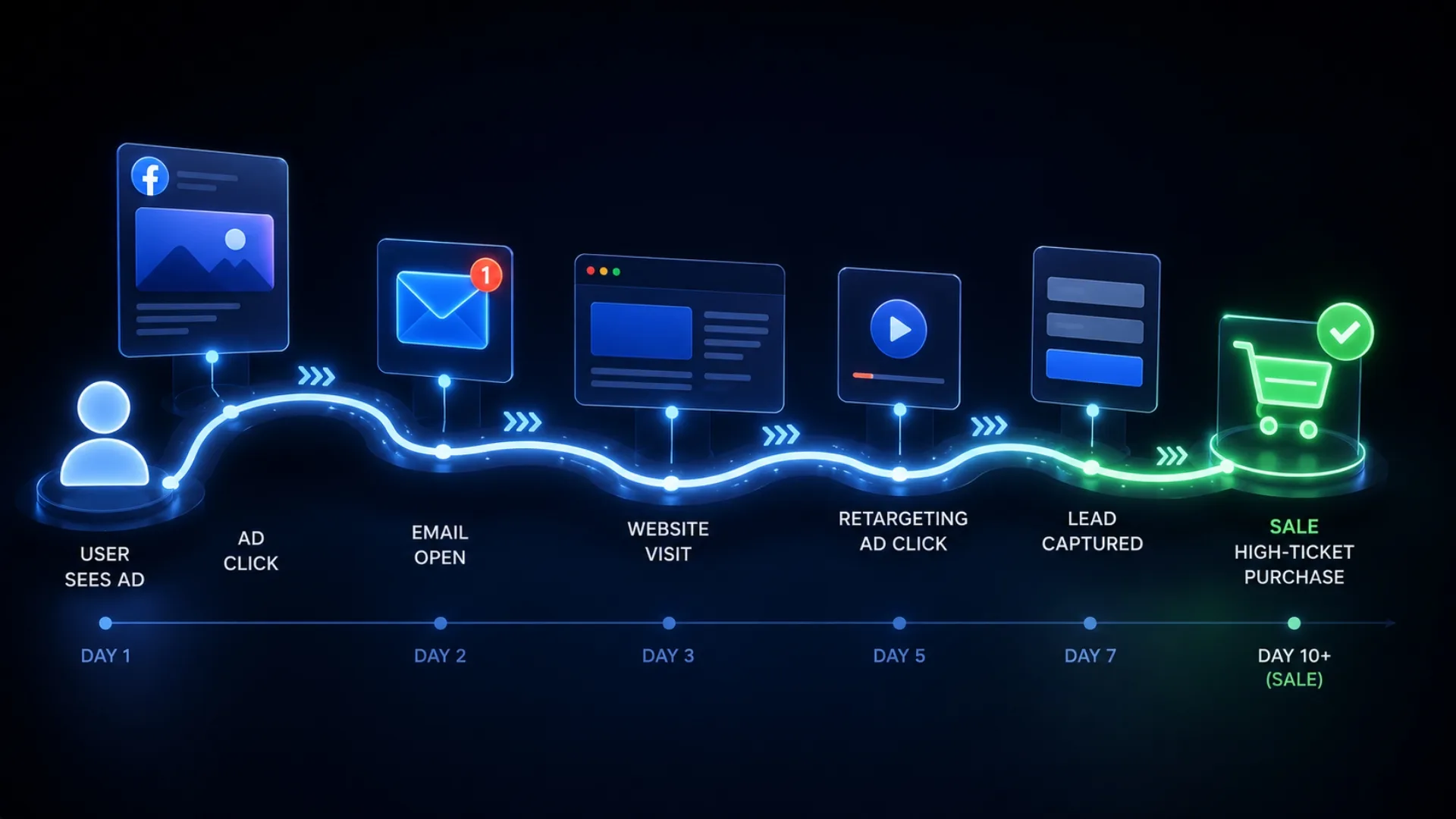
For each buyer, trace the full path. First ad click, which creative, every email opened, every page visited, every retargeting ad clicked, all the way to the day they paid.
One timeline per buyer.
Then put those timelines side by side and look for the repeated pattern on the front end.
Maybe every buyer first clicked a testimonial-style ad. Maybe they came in through a problem-state framing your lead-gen ads never use.
Maybe they came from an angle that produces fewer leads than the others, which is why you almost killed it last month.
When the same pattern shows up across the first ad they clicked, the email tone they opened, and the retargeting angle that pulled them back, that's the language that moves buyers.
The sales call didn't turn a tire-kicker into a buyer. The first ad already decided.
The front-end message isn't the top of the funnel. It's the filter that decides who ends up at the bottom.
How TrueMetriks helps you do this
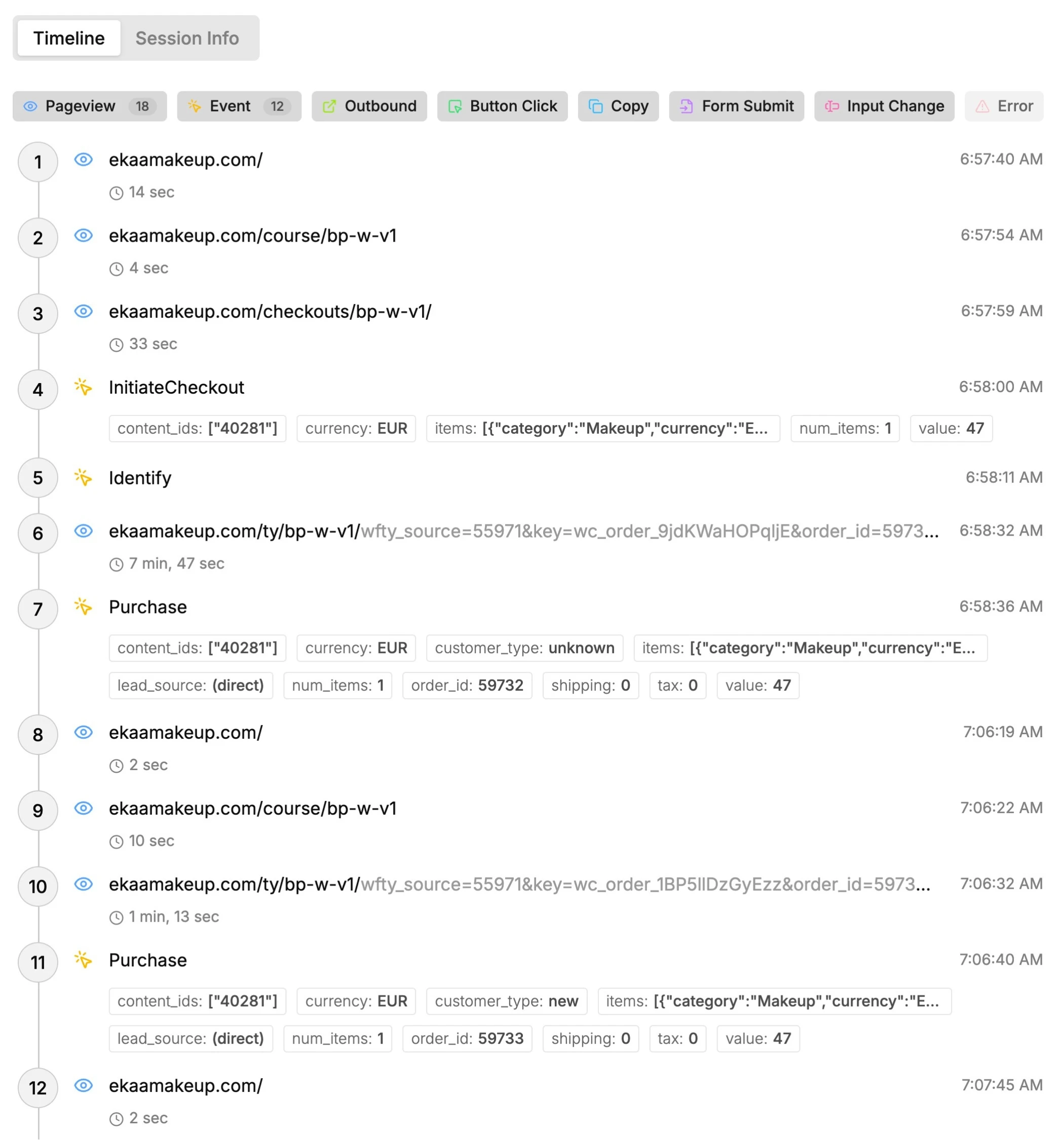
To trace a buyer from a first ad click, through email opens and page visits and a retargeting click, to a sale weeks later, you need a system that stitches every touchpoint to the same person across time.
Not last-click inside 7 days. First click, any click, last click, and every touch in between, tied to the same buyer from the first ad to the day they paid.
That's what TrueMetriks does. We capture every touchpoint, hold it across the full sales cycle, and tie it back to the buyer once they convert.
So instead of guessing which ad created the sale, you can open the timeline and see it.
Once you can see the pattern, you build more ads that match it. And you feed that signal back as the event you ask Facebook to optimize for, instead of "qualified lead."
The exact event depends on the pattern, but it's almost always earlier in the journey, more specific, and more aligned with how real buyers behave than a generic form fill.
Closing thought
The advertisers who scale high-ticket consistently aren't the ones with the best closer or the slickest email sequence.
They're the ones who figured out which front-end message produces real buyers and built the rest of the machine around feeding more of that audience in.
Stop optimizing for the lead. Start optimizing for the front-end pattern your real buyers share.
Then Facebook can finally scale the audience that actually pays.