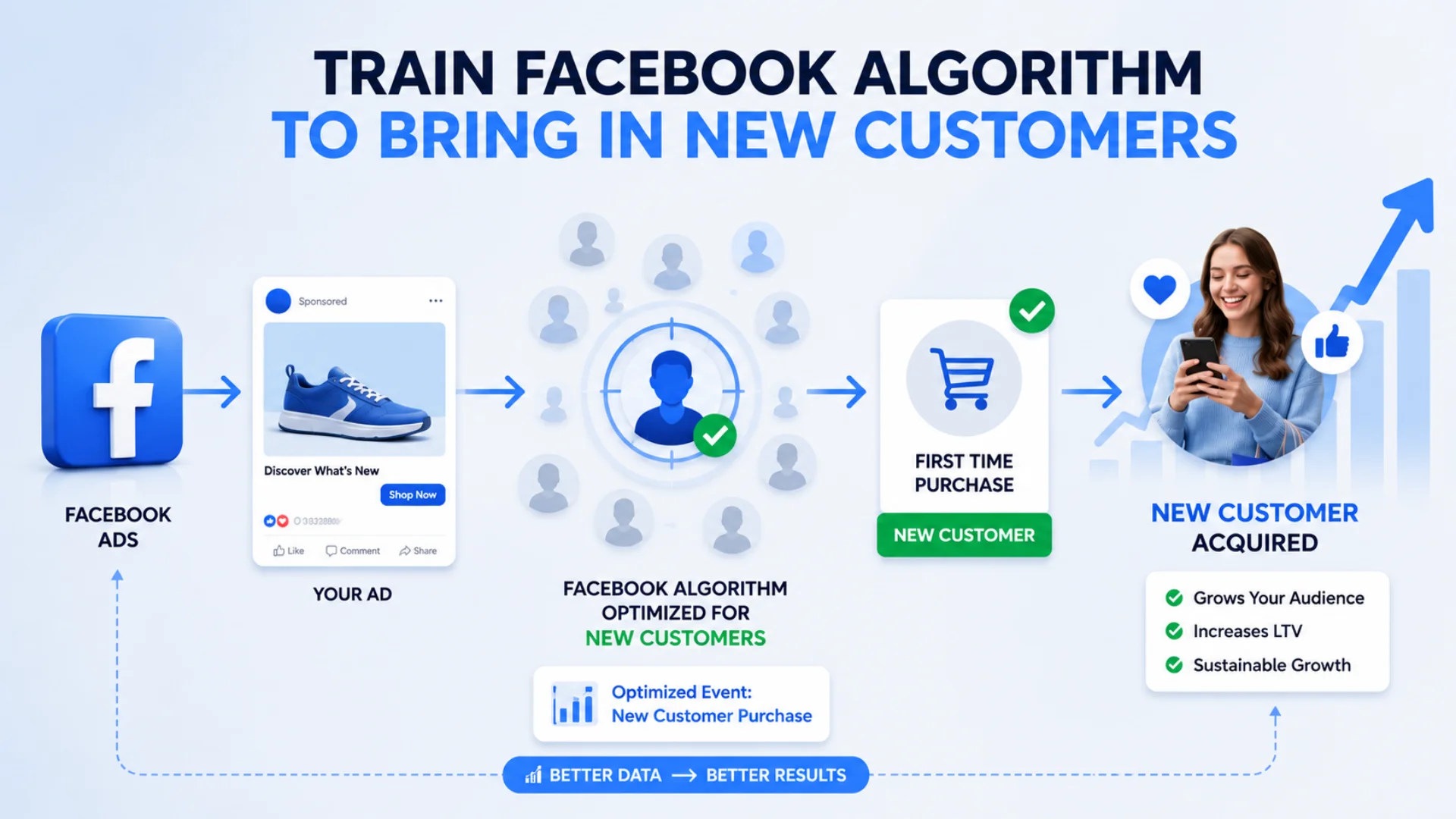
A business grows when new people walk in the door, buy for the first time, and come back later for more.
Repeat orders and lifetime value compound on top of that inflow. Without it, the math stalls.
Most prospecting campaigns are quietly optimizing for the wrong group.
The conversion event the algorithm trains on covers everyone who buys, so it drifts toward the easiest conversions, and those are almost never strangers.
So why do most Facebook ad accounts keep bringing in people who would have bought anyway, and what do you change to fix that?
Growth is new customers, not repeat purchases dressed up as ads
Before touching a single Facebook setting, it is worth being clear on what growth actually is, because the answer changes how you read every line in your ads manager.
Most advertisers measure the same way. Total purchases, total revenue, total ROAS at the account level.
New and returning buyers pooled into one row, and as long as the number on the right looks good, the ads look like they are working.
But those two groups behave nothing alike. A first-time buyer is the start of a relationship.
A returning buyer was probably going to come back anyway through email or just remembering you exist.
Resells matter, but the pool is finite, and the only way to grow past it is to bring more first-time buyers in.
When you run a prospecting campaign, Facebook looks for more people who match the kind of person who tends to convert on your offer.
The more conversion data you feed it, the sharper it gets. The deeper read on how the algorithm learns is in this earlier post on how ad platforms actually work.
And here is what most setups miss. The default purchase event fires every time someone checks out, whether they have bought before or not.
Facebook has no built-in way to tell a first-time buyer apart from a returning one.
The data going back is a mix of both, and the algorithm chases the easier signal.
It learns that the people most likely to convert are the people who already know you, and it goes out hunting for more of them.
So when the same purchase event covers everyone, the algorithm does not optimize for new customers. It optimizes for whoever is cheapest to convert.
And the cheapest conversions are almost always people who already know you.
The fix is a separate event, and one campaign change
So the real question is what you can change tomorrow, because once you see the mechanism the fix is small and the upside is the entire growth engine of the business.
The algorithm runs on training, and you are in charge of what it gets trained on.
To find new customers, you have to tell it what a new customer looks like.
The move is this:
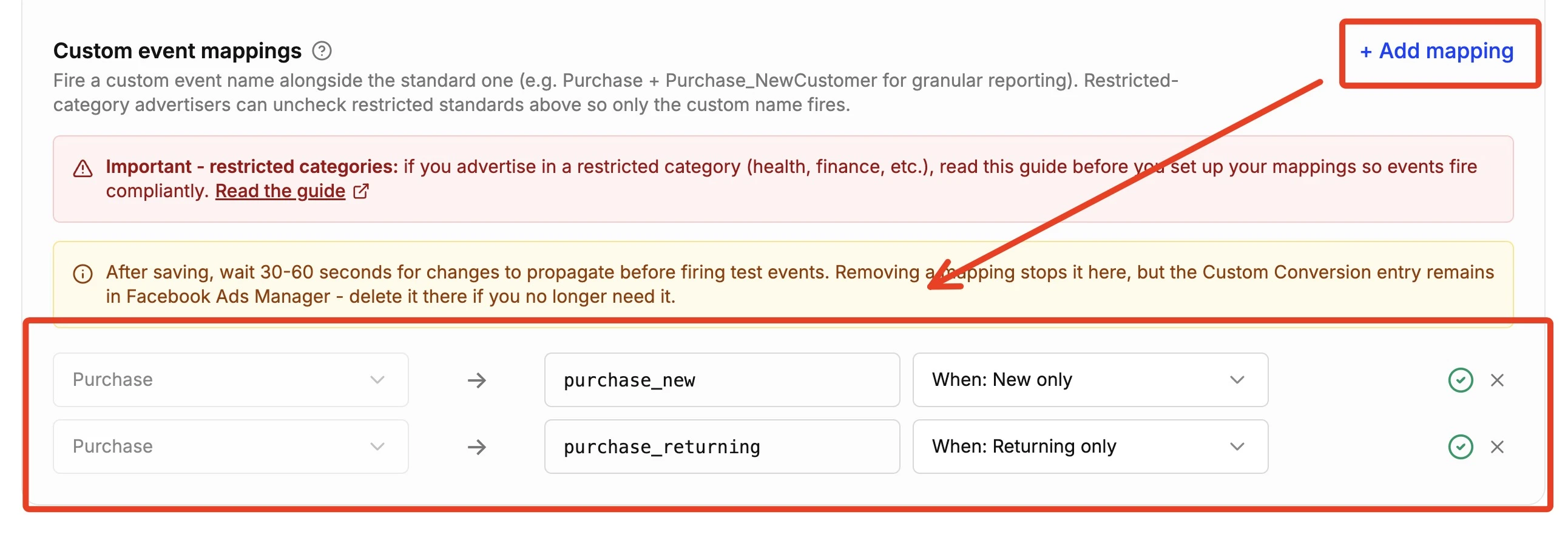
When a purchase happens, check whether the buyer has bought from you before. If they have not, fire a separate event called something like "new customer purchase."
Returning buyers fire their own event for measurement, but they sit in their own bucket.
Then, inside the prospecting campaign, set the new-customer event as the conversion optimization objective.
Same campaign, same creative, same budget. Different pool, because the algorithm is now training only on first-time buyer data.
The practical hurdle is knowing, at the moment of purchase, whether the buyer is new or returning.
Shopify exposes this natively. WooCommerce has its own way.
On GoHighLevel, ClickFunnels, and most non-ecom platforms, you would need to maintain a customer database yourself and check against it on every order.
This is very easy to do with TrueMetriks because it handles the cross-reference for you, which means the new-customer event becomes a switch you turn on rather than a project you build.
Once the prospecting campaign is optimizing on a new-customer event, every dollar of ad spend is working on the only group of buyers that can actually grow the business.
What does a well-tuned account actually look like?
So now you know how to set it up. The next question is what this looks like once it is running, because a setup is only worth doing if the numbers on the other side are real.
The wrong expectation is that flipping the switch makes every prospecting purchase a brand new customer.
Facebook's targeting is probabilistic, not exact, and it will still occasionally land on a returning buyer.
One TrueMetriks client running MaskedEyes.com has been sitting close to 90 percent new customers month over month from his prospecting campaigns.
That is not a promise, it is the upper end of what a well-tuned account can reach when offer, creative, and targeting are pulling in the same direction.
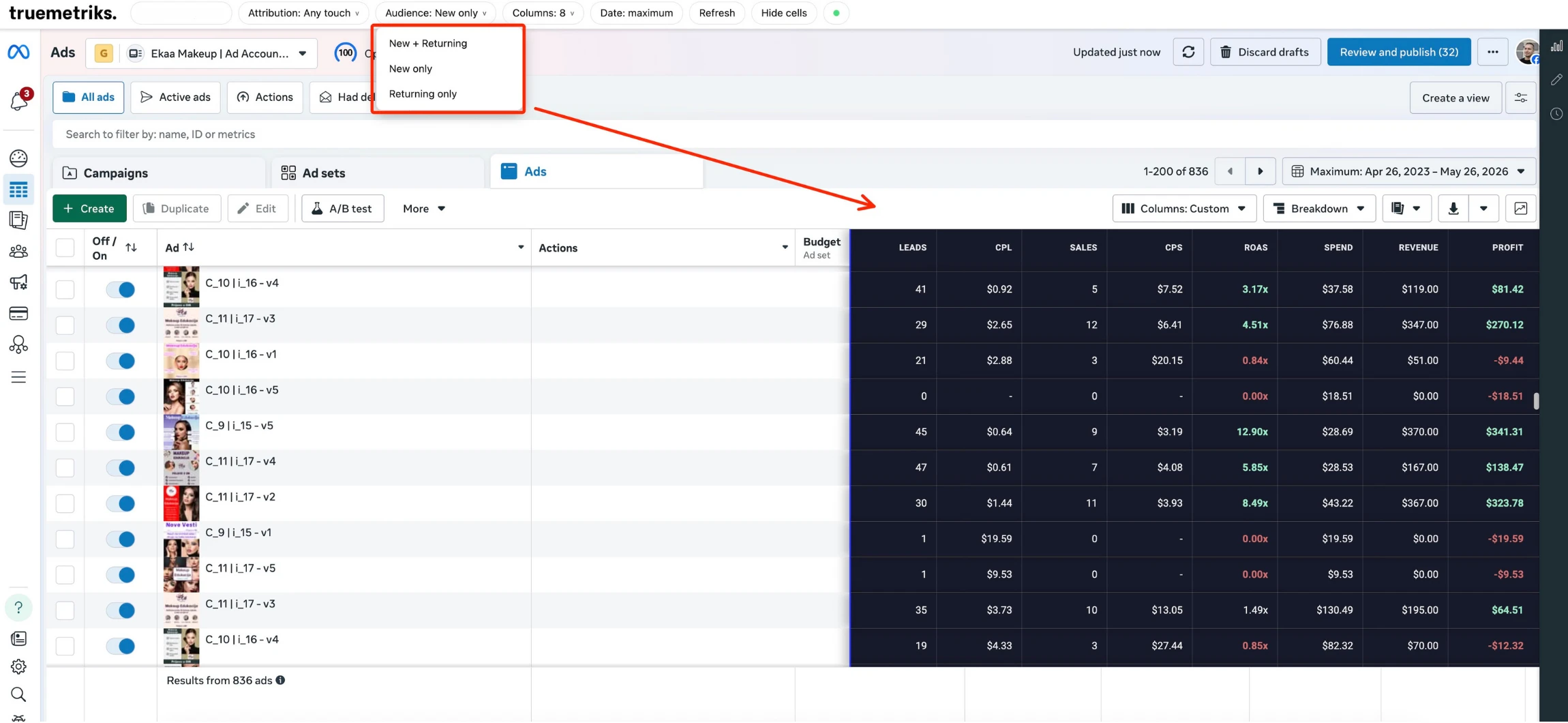
A prospecting campaign at 30 percent new customers is recycling your existing list. One at 75 percent is expanding it.
A well-tuned account sits at 70 to 80 percent genuinely new customers, which is the difference between an ad account that holds the business steady and one that actually grows it.
And once you can see that gap, the job stops being "get more conversions" and starts being "get the algorithm trained on the right conversions."
Once that lands, every other part of the ad account starts pointing in the same direction.
What does this look like inside TrueMetriks?
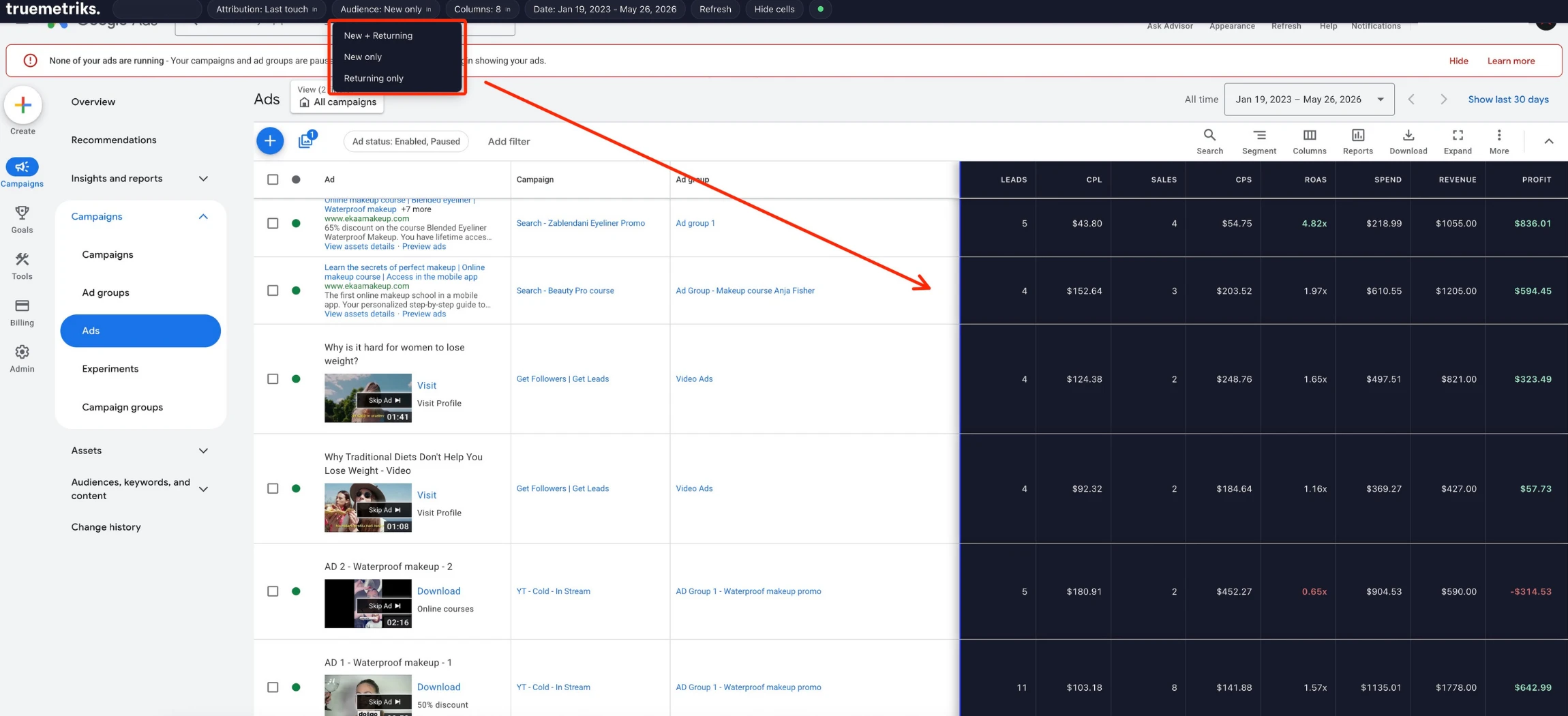
A quick look at where this lives in the platform. The event toggle, the new vs returning breakdown per campaign, and what gets sent back to Facebook.
If you want to see this on your own numbers, the trial runs 7 days and does not require a card.