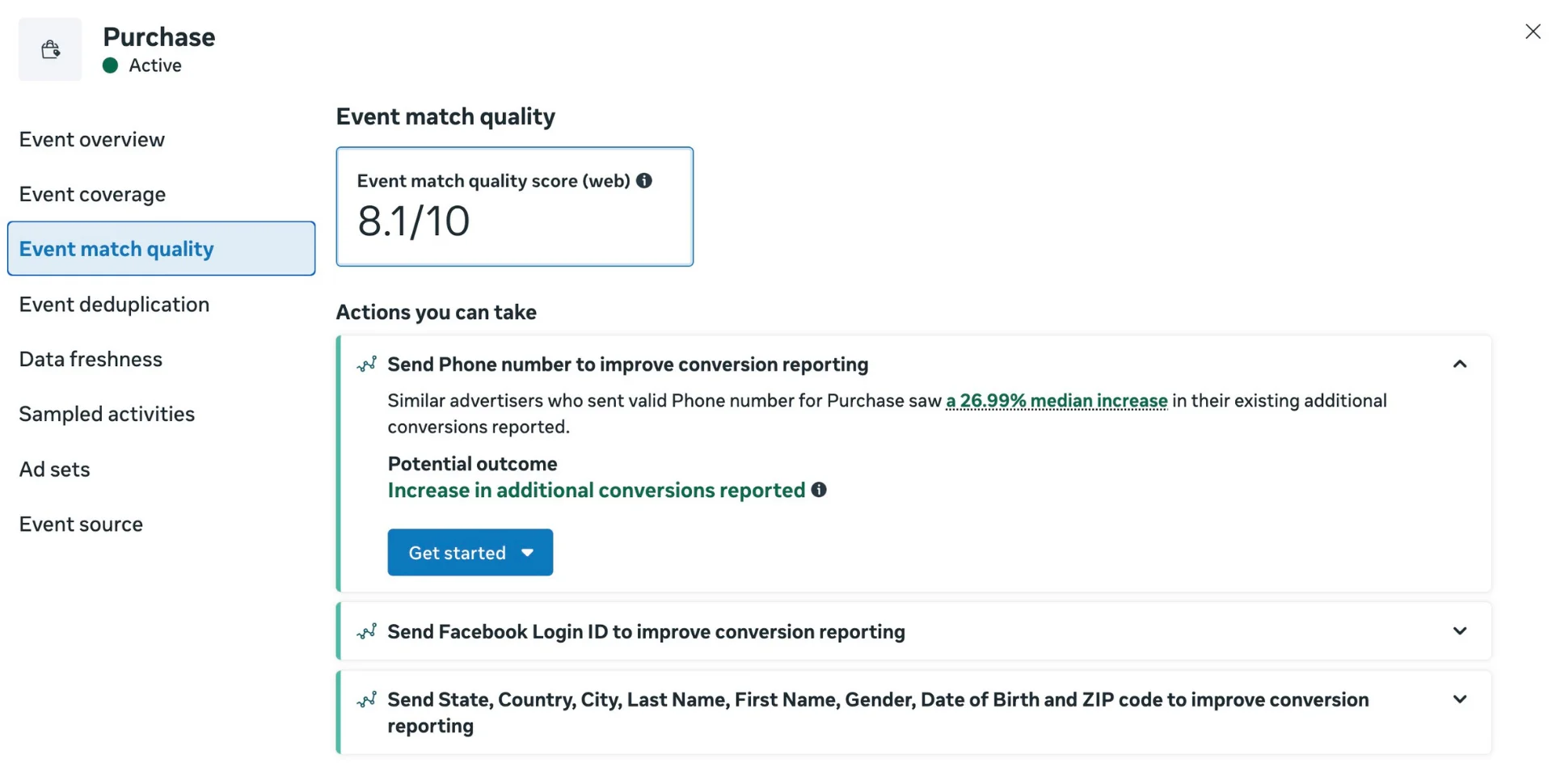
A lot of advertisers have been told to push their EMQ score to 10 out of 10 if they want their ads to perform better.
So they try everything to increase the score hoping their results will improve... but they don't.
Because EMQ score doesn't affect the results of your ads. So if a perfect score will not improve performance, what actually does?
What does Event Match Quality actually measure?
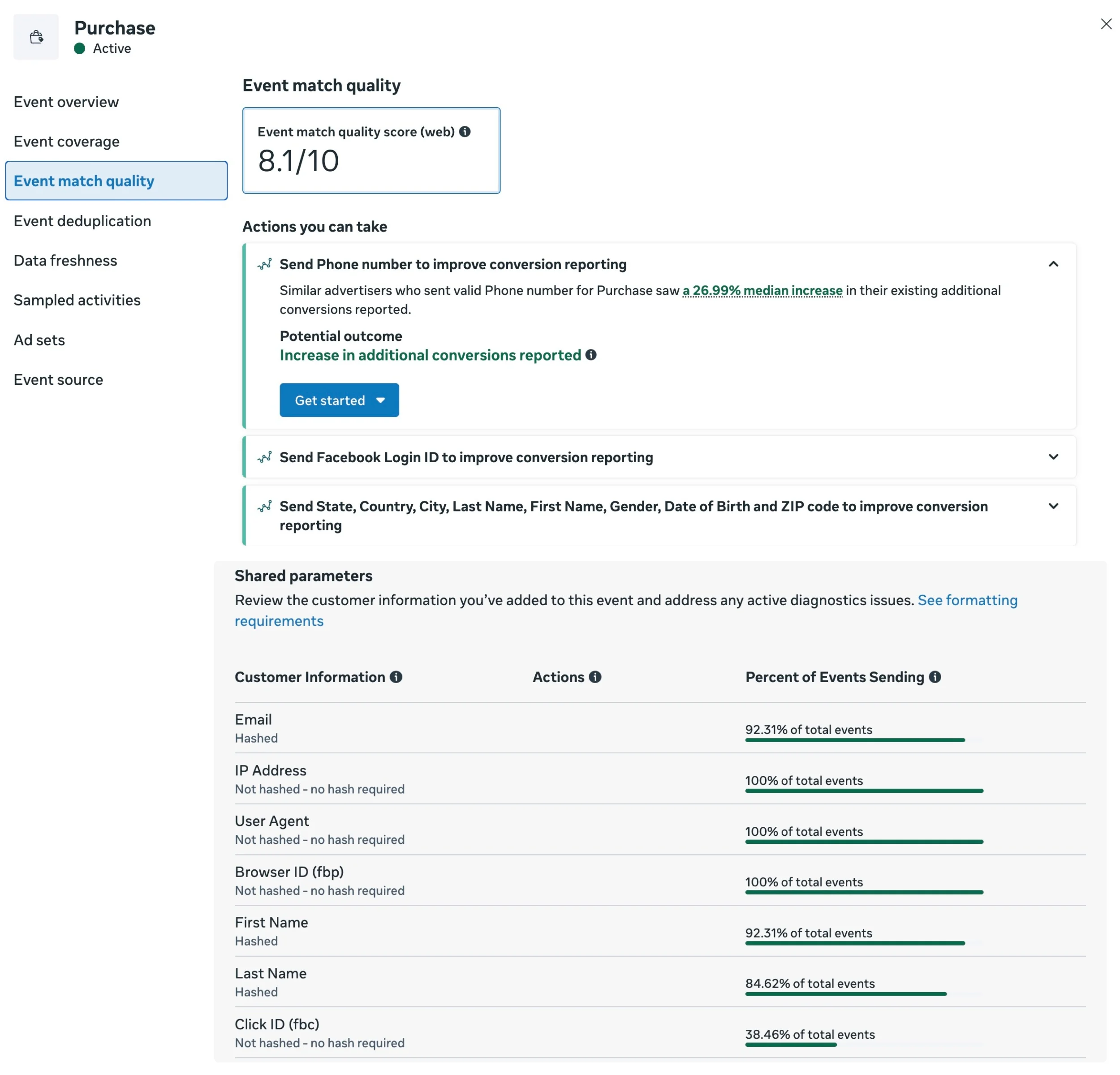
EMQ stands for Event Match Quality. What Facebook measures with that score is whether the customer information you attach to each conversion is present and formatted correctly.
Email in the email field. First name in the first name field. Phone in the phone field. The more fields you fill, the higher the score climbs.
What Facebook does not show on that dashboard is whether any of those values belong to a real buyer. The score does not care.
It checks the shape of the data. It does not check the truth of the data.
What actually drives results?
Three pieces of information do the actual work. The click ID. The buyer's email. And the product they bought.
The click ID is created by Facebook when a prospect clicks an ad, and it gets appended to the URL they're being sent to from the ad.
It's the fingerprint that ties the buyer back to the ad they clicked. When it rides back to Facebook with the conversion, the algorithm knows this exact person bought this exact product from this exact ad.
That is the trigger. Facebook then walks its database, finds other people who behave like that buyer, and starts showing your ad to them.
That is the entire optimization engine. The algorithm needs to compare your real buyer to other real people.
If it does not know who bought, which ad they came from, or what they bought, the comparison has nothing to run against.
This is why an EMQ score of 2 out of 10 built on real data will outperform a 10 out of 10 built on filler every single time.
The 2 might only carry three fields, but if those three fields are the click ID, the email, and the product, the algorithm has everything it needs to find more buyers.
The 10 with no real click ID and no real email is a beautiful dashboard with nothing underneath.
One note, the product info is not mandatory information for Facebook or EMQ. Critical data we need to send is the click ID and the buyer's email.
Product details tells Facebook how much money the customer spent which allows Facebook to find people who will spend similar amounts, but again, it's not mandatory information we need to send back with each purchase event.
Why is the score so easy to inflate?
EMQ is a parameter check. If the email field is filled, the score counts it. It does not test whether the email belongs to a real customer.
Which means EMQ can easily be inflated with false data. Emails, first name and last name can be fake.
Phone number can be 111 111. This will cause the score to climb to a 9, then a 10. The bar turns green.
But the algorithm does not optimize on the bar. It optimizes on what it can compare.
When it takes that 10 out of 10 worth of fake values and tries to match them against the real users in its database, it finds junk or nothing.
There is no behavioral pattern to learn from. There is no audience to expand into. Targeting drifts. Cost per result climbs. The dashboard still shows a perfect score.
Score versus signal
So the reframe is simple. The score is what Facebook shows on the dashboard. The signal is what the algorithm actually uses.
Once you stop chasing the score and start chasing the signal, the work changes.
Stop checking EMQ as proof that tracking works. For every conversion in the last 24 hours, ask whether the real click ID, the real buyer email, and the real product information made it through.
The score is the dashboard. The signal is the engine. Check the engine.