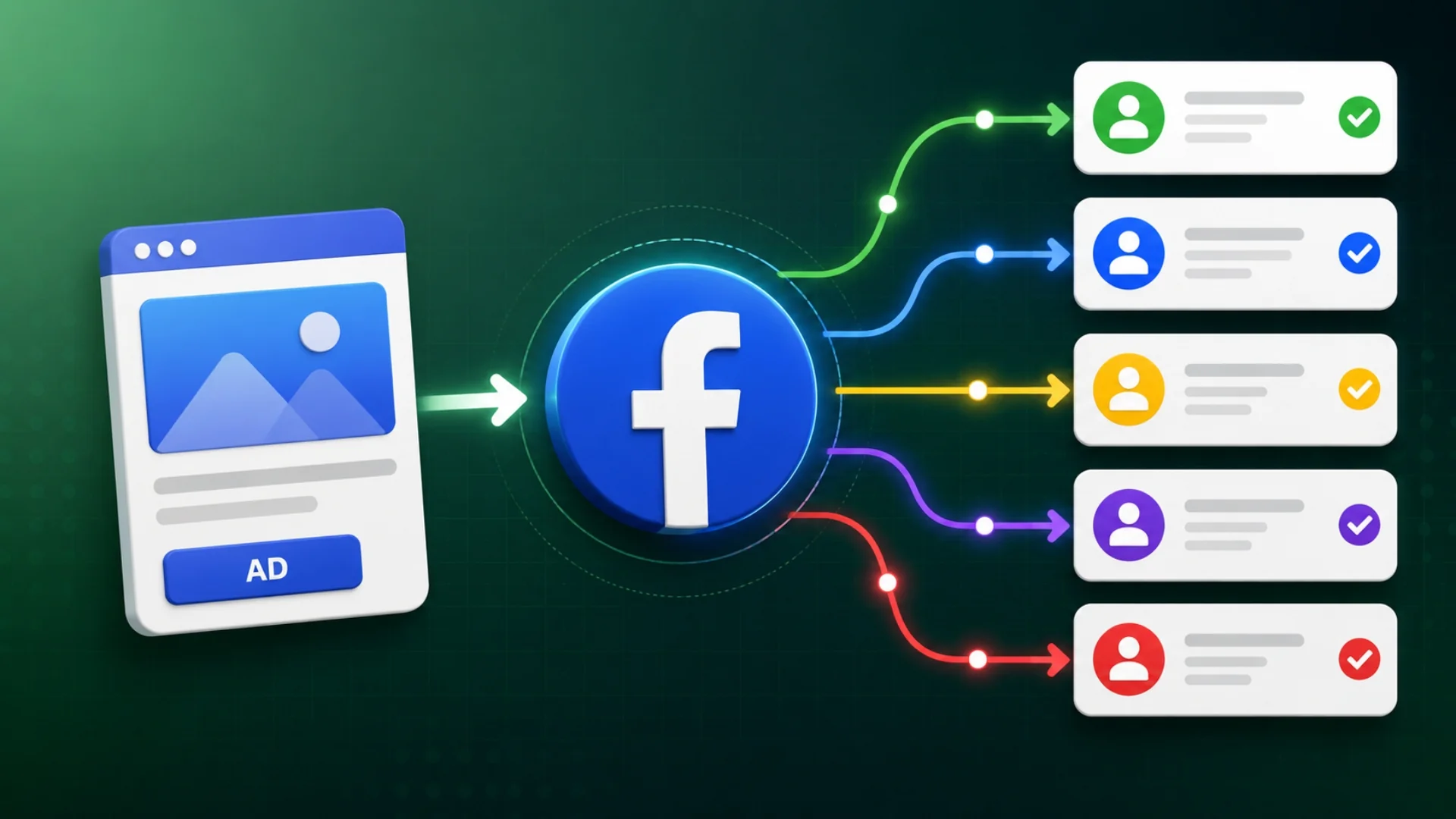
Plenty of things move your ad numbers around. iOS. Ad blockers. An algorithm update like Andromeda. Something new breaks every few months and everyone scrambles to react.
But one thing about Facebook never changes, and once you understand it, you'll be able to make any campaign profitable.
Here it is:
Facebook only makes money if people keep coming back and keep clicking. So it guards their experience above everything else, ads included, and it will not put an ad in front of someone it thinks they'll resent.
That rule has never changed and it never will.
What the algorithm actually lost
So that's the constant. Facebook wants to show each person an ad they'll be glad to see. What changed is how easily it can pull that off.
To show you the right ad, Facebook has to know what you want right now. And what you want keeps moving.
You're hot on something today and cold on it tomorrow. People change their minds constantly, and Facebook has to keep up with a target that never sits still.
Before iOS 14, it could. It saw your behavior across nearly every app and site you touched, in close to real time.
It knew what you bought last week, what you'd been researching, what you were in-market for at that exact moment. Not who you are in general. What you want right now.
That live read is the thing that went dark.
Facebook didn't forget how people work. It still knows your demographics, your interests, your patterns. What it lost was the freshness.
Picture the difference between knowing what someone wants to buy this week and knowing they bought something one year ago. Same person. Opposite value to an advertiser.
One is a sale waiting to happen. The other is already gone.
iOS didn't make Facebook dumber about people.
It took away its recency, the real-time read on who wants what right now, and that single missing layer is what every "the algorithm is broken" complaint traces back to.
Why Facebook suddenly demands so much data from you
So now you know what's missing. But that raises the question that actually changes how you run ads.
If Facebook lost its own fresh view of your buyer, where is it supposed to get that freshness back from?
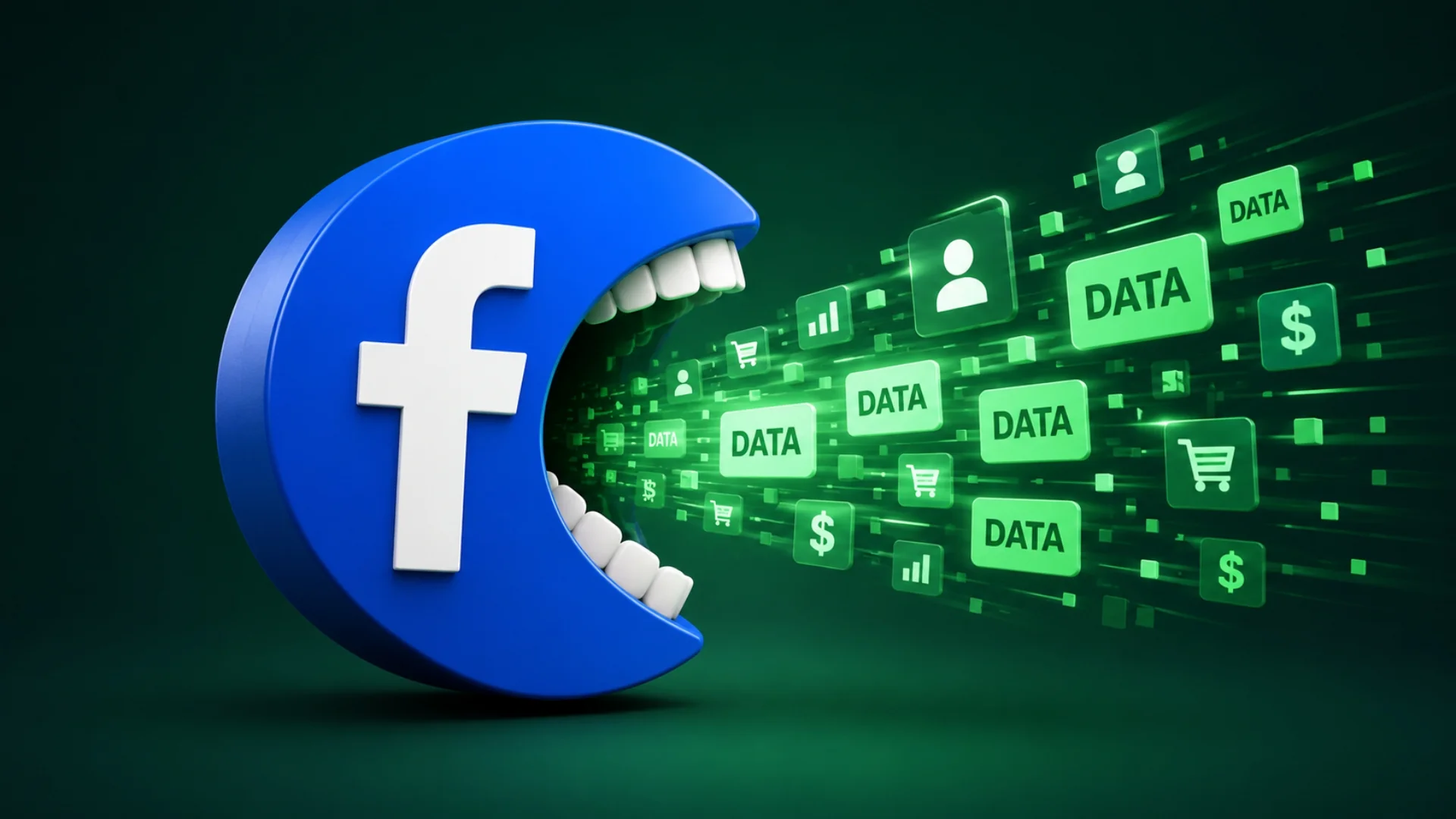
Well, Facebook now rebuilds that freshness from the data you send back.
Every time someone buys, the ideal signal going back is "this person, this email, just bought, right now, from this exact ad, and he spent this much money."
That round-trip is the freshness. That's Facebook borrowing your eyes because it can no longer see for itself.
And this is where it suddenly seems to demand so much from you. The deduplication, the conversion API, the click IDs, the matching.
A lot of advertisers read that as Facebook being difficult, more hoops to jump through for no reason.
It isn't bureaucracy. It's Facebook asking you to hand back the freshness it can no longer collect on its own.
And the stakes split hard right here. Send corrupt data or missing data, and Facebook targets blind, the way you've been experiencing it.
Send recent, accurate data, and it targets like it's 2019 again. Same platform.
The only difference is which advertiser fed it well, because the algorithm only gets sharp for the account that supplies the signal.
Facebook's demand for your conversion data isn't red tape. It's a demand for recency, because the only fresh signal it has left is the one you send back the moment someone buys.
One product, three buyers
Now here's why that recency is worth more than any audience setting you'll ever touch.
The same product gets bought by completely different people, for reasons that have nothing to do with each other.
Take a Rolex for example. One watch, one model, one price tag. Now look at who's actually buying it.
The first buyer is the enthusiast. He genuinely loves watches. He cares about the movement, the history, the engineering inside the case.
He could read you the entire lineage of the model. He'd buy this watch and wear it on a desert island where not a single other person would ever see it, because he's not buying it for anyone else.
He's buying it for the thing itself.
The second buyer doesn't care about any of that. He's buying a signal.
He goes out on weekends, he wants the beautiful women to notice him, and he knows what happens when the right woman glances at his wrist and sees the watch.
To him a Rolex reads as "this man has money." He's not buying a piece of engineering. He's buying the reaction.
The third buyer has a meeting on Monday. He's walking into a room with investors, and investors notice what you wear, whether they admit it or not.
He needs to read as someone who's already successful, someone you can trust with capital, before he said a word.
To him the watch is a credential. It's part of looking like the kind of person the deal should go to.
One watch, one price, three buyers who want it for reasons that have nothing to do with each other, and the only way an algorithm can tell them apart is with signal fresh enough to read why each one actually bought.
The wrong angle doesn't just miss the buyer. It repels him
And here's where this stops being a targeting curiosity and starts costing you sales.
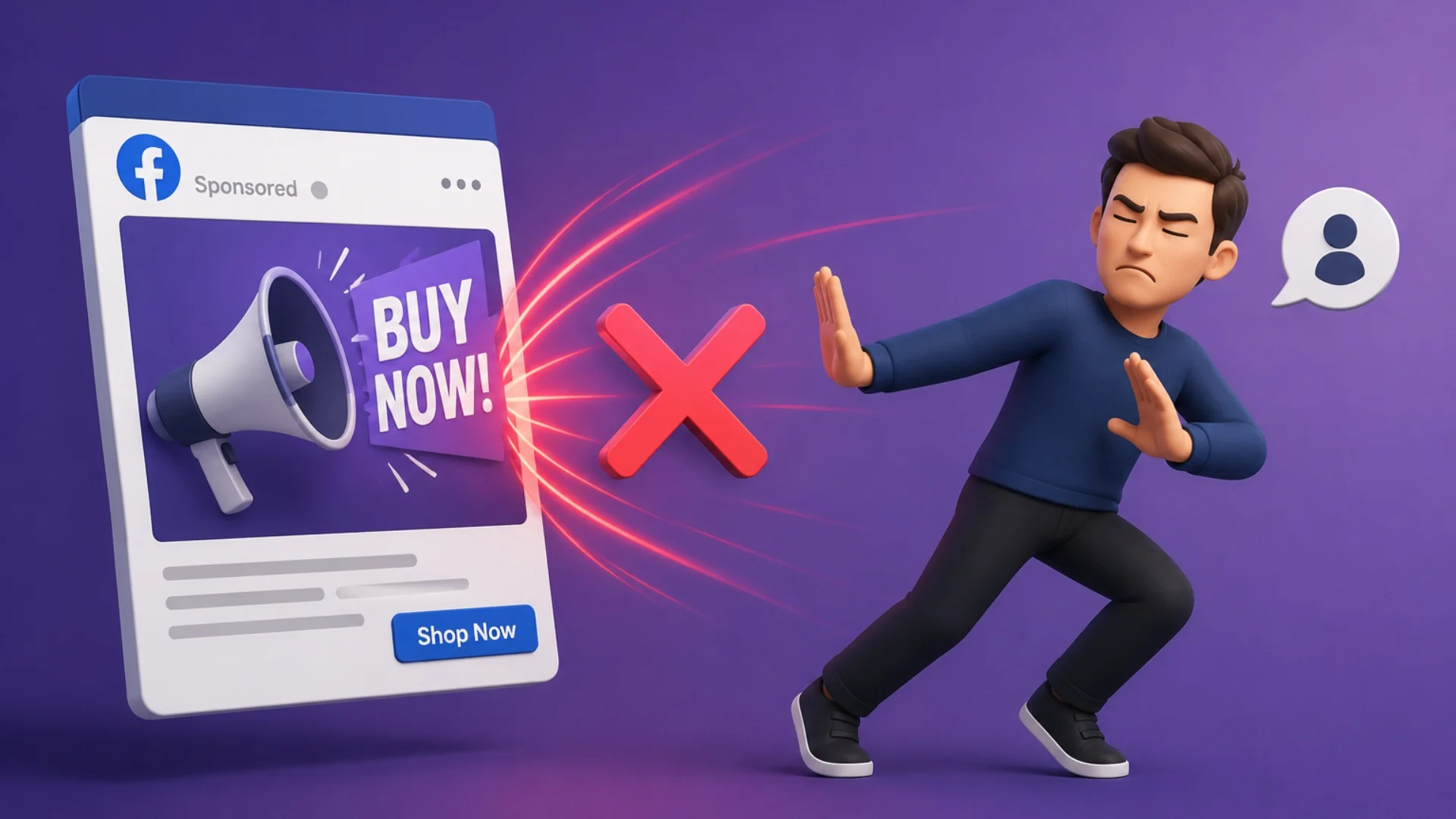
The wrong angle doesn't just fail to land on a buyer. It drives away the one who was about to purchase.
Most advertisers assume a generic ad is the safe play. Worst case, it just doesn't land for some people.
No harm done, you cast a wide net, a few slip through. That logic feels right, but it's wrong.
Run the "impress women at the club" angle in front of the business buyer. The one with the investor meeting.
Watch what he does. He doesn't shrug and move on. He bails. And he wanted the watch.
People are psychological creatures. He doesn't separate the product from the story you wrapped around it.
You just told him this watch is for getting attention from women. He doesn't want attention from women. He wants to walk into a boardroom and be taken seriously.
So in his head, this stops being "the watch that makes me look credible" and becomes "the watch for guys chasing women at the bar."
That's not the watch he was going to buy. Same Rolex. You poisoned it with the frame.
And that reaction is the exact thing Facebook is built to avoid, so an ad that repels the people it reaches is an ad Facebook quietly stops showing.
The wrong angle doesn't just fail to land. It poisons the product for a buyer who was ready to purchase, which is why one generic ad captures a single slice of your market and quietly repels the rest.
Run the angles. Let them teach the algorithm
So if one ad can only ever capture one slice of the pie, the way to scale your ads is to test multiple angles (ads) for the same product.
Here's what most advertisers do instead. They run one ad.
They write the angle that makes sense to them, the one reason they would buy the thing, and they push budget behind it.
When it plateaus, they don't suspect the angle. They blame the creative, the audience, the niche, the economy.
They go make a new ad with the same single frame and wonder why the needle didn't move.
Run multiple angles for the same product. One that speaks to the different people and their desires in your audience.
Now watch what the algorithm does with that. Every angle that converts sends Facebook a clean signal: this type of person responded to this type of message.
And because you handed back the recency, Facebook can act on it. It takes the enthusiast who bought from the enthusiast angle and goes and finds more people like him.
It does the same for the status buyer, separately, for the status angle.
You're not fighting the privacy update anymore. You're handing the algorithm the fresh, segmented signal it needs to rebuild the precision it lost in the first place.
You stop running one ad and hoping, and start running an angle per reason, because every angle that converts teaches Facebook exactly who to go find next, and that's how it rebuilds the targeting it lost, on your dime, for your offer.
This isn't a Rolex thing. It's your offer
The Rolex was just an example we used to paint the picture. But the same split is sitting inside whatever you sell right now.
Say you sell a dog training program. Who actually buys it?
One buyer just brought home a puppy and the house is chaos. Chewed shoes, accidents on the rug, no sleep. He wants peace back.
A completely different buyer is scared of his own dog. It's lunging, growling, snapping, and he's quietly terrified someone's going to get bitten.
Same program. Two reasons that share nothing.
The ad that says "raise a calm, happy puppy" means nothing to the man afraid of his dog, and the ad about handling aggression doesn't speak to the new puppy owner at all.
Ecom is the same once you look. The person buying your product as a gift and the person buying it for daily use are not the same buyer.
Same item, two reasons, and a single ad only ever talks to one of them.
So do the work the Rolex example was built to make you do.
Whatever you sell has its own multiple types of buyers, and the angles you're not running aren't neutral.
They're the buyers you're currently pushing away without ever seeing it happen.
The whole thing runs on whether your data can tell the angles apart
Here's where this either works or quietly destroys your account.
The entire multi-angle strategy rests on one thing underneath it, and most advertisers never check it.
By now you might be ready to go write multiple angles and launch them tonight. Hold on.
Because the strategy is only as strong as the attribution sitting under it, and that part stays invisible until it costs you.
To act on which angle won, your data has to do three things at once.
It has to be accurate, so each sale is tied to the right ad and the right angle. It has to be recent, fast enough to actually count as recency instead of history.
And it has to be complete, carrying the email and click ID and the identifiers that match the buyer back to the exact ad they came from.
Miss any one of those and the whole thing falls apart.
If you have a sloppy tracking system, then here is what's going to happen:
A sale comes in and your data smears it across the wrong ad. Facebook can't tell which angle converted, so it learns the wrong lesson.
You look at your dashboard and conclude the status angle is your winner when the enthusiast angle was actually doing the work.
So you pour budget into the status angle and choke the one that was quietly carrying the account.
That's the same failure mode that drains budgets on a single ad, except now you've multiplied it across every angle you run.
Optimizing on poisoned data means turning off your real winners and scaling your losers, with full confidence, because the numbers told you to.
The multi-angle strategy is only ever as good as the attribution under it, because if your data can't tie each sale to the right angle, you'll scale the loser, kill the winner, and never know you did it.
How you actually feed Facebook recent, angle-accurate data
So the real question isn't whether to run angles.
It's how you get Facebook the recent, angle-accurate data that makes them work, because without that the whole system is guessing.
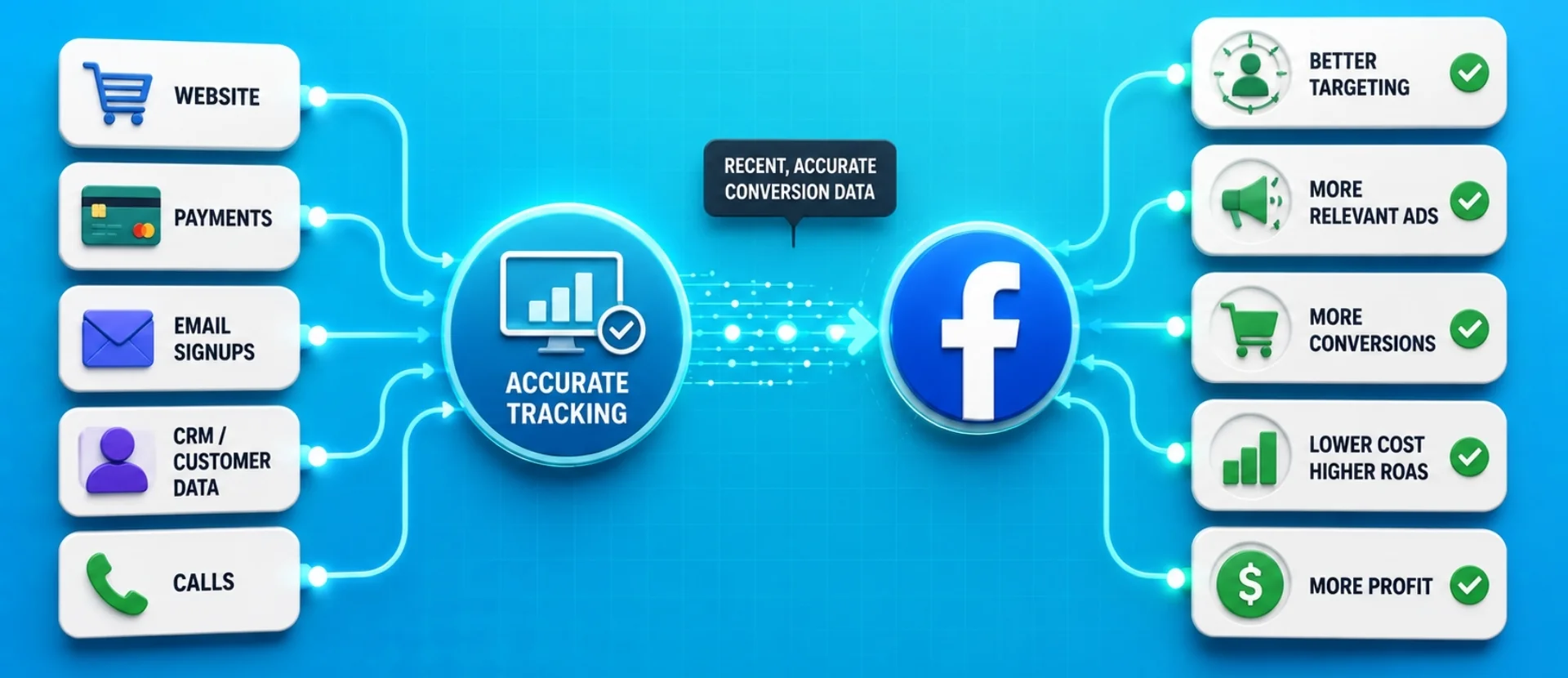
What you need is a reliable and accurate tracking system. One that will capture every conversion, tie it to the exact ad and angle it came from, and send it back to Facebook to match the buyer.
That's the round-trip the whole strategy depends on.
That's what TrueMetriks does. It sends Facebook recent, correct, per-ad conversion data so the algorithm can rebuild the recency it lost, and on your side, it shows you which angle actually converted.
So you're not guessing whether the status angle or the enthusiast angle won. You can see it.
Max Sylvestre runs it on his own accounts. He owns Instashred and MIC, My Investing Club, and across his roughly ten-year career he's put more than $100 million in ad spend through Facebook for himself and his clients.
Someone with that much on the line doesn't run on data he can't trust.
Once Facebook gets clean, recent, per-ad data back, it does on your account what it used to do for free before iOS.
It finds the next buyer for each angle, and you get to watch, in real numbers, which angle is actually winning.
What ad blockers and iOS really took, and how you take it back
Which brings the whole thing back to where it started, and to the one sentence worth keeping after you close this tab.
Ad blockers and iOS didn't take Facebook's ability to find your buyers. It took the freshness.
You give that freshness back by feeding Facebook accurate, recent, per-angle conversion data, and once you do, the same product starts selling to three different people, because you've finally let the algorithm tell them apart.
Facebook never lost the ability to find your buyers.
It lost the freshness, and you hand it back one accurate, recent, per-angle conversion at a time, which is the whole reason the same product can sell to three people who'd never agree on why.
The advertisers winning right now aren't the ones who beat the privacy update.
They're the ones who quietly handed Facebook back the one thing it lost, and let it tell their three buyers apart for them.
Another update is always coming. What sits underneath it never changes, and now you know how to use it.