Here's what Facebook ads cost right now per click, per lead, per sale and per booked call, so you can see if what you're paying is normal or if something in your account is causing it.
Hold these up against the numbers in your own Ads Manager.
| What you're paying for | Median |
|---|---|
| Click, traffic campaigns | $0.60 |
| Click, leads campaigns | $1.80 |
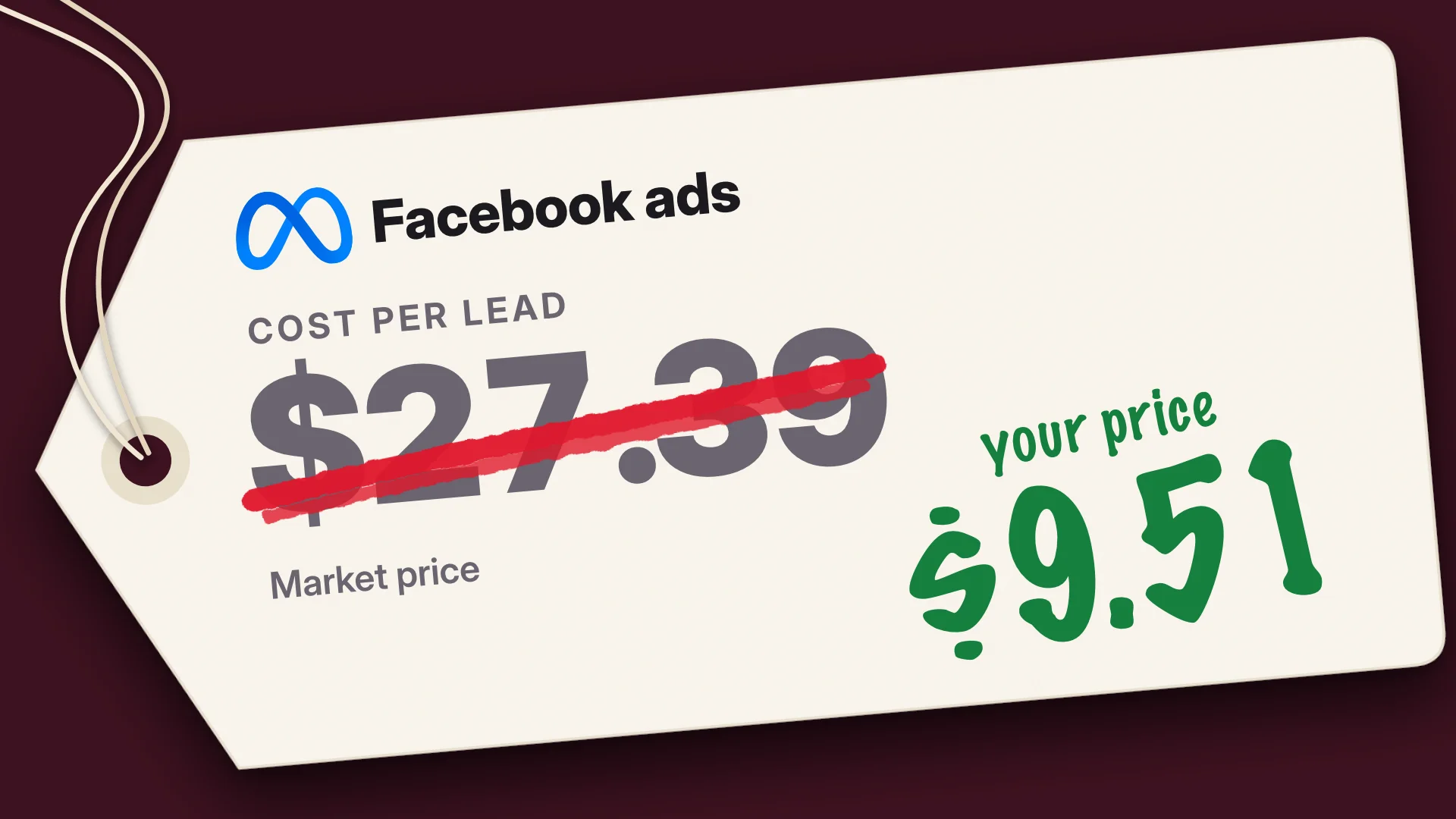
| Cost per lead | $27.39 |
| Cheapest leads | Career & Employment $12.30, Real Estate $13.74 (qualified leads cost more) |
| Most expensive leads | Dentists $61.56, Beauty & Personal Care $50.91 |
| CPM, ecommerce | $15.06 (up 13%) |
| CPM, Health & Wellness | $21.80 (the highest) |
| Cost per purchase, ecommerce | $38.99 |
| Qualified booked call, competitive niches | $200 to $300 |
These are all US medians, not what you will pay.
Nobody publishes a cost per booked call, at least nowhere we found in our research, so that last row is what we see with our clients.
In competitive niches like medical, health, wellness and finance, a qualified booked call can cost $200 to $300, depending on how and what they're running.
Most of these niches only work with products or services that cost $5,000 or more.
And because these are medians, some advertisers pay more than these numbers and some pay less. Which side you land on is what the rest of this post is about.
How much should Facebook ads cost you per month?
It depends on whether you're testing or scaling. To test, you can start with as little as $10 a day.
The point of testing is to see if people are interested in what you have to offer, and they show it by clicking on your ad, booking a call or buying.
Once people bite and you want to scale, that's where the math comes in. Meta needs about 50 conversions a week to optimize properly.
Until it gets them, your ad set sits in what Meta calls the learning phase, which means Meta is still working out who to show your ads to.
So your scaling budget is 50 x your average cost per result x 4.3 weeks. At a $27.39 lead that's about $5,900 a month, and at a $38.99 sale it's about $8,400 a month.
You don't need that on day one, you grow into it once the test shows people want what you're selling.
And most importantly you grow into it slowly. You can start with $10 a day, then slowly increase the budget to $20, then $50, then $100 etc.
Most people when they hear how much money they need to scale are afraid to even start, but what they don't know is that scaling happens gradually, not immediately.
Why do Facebook ads cost more every year?
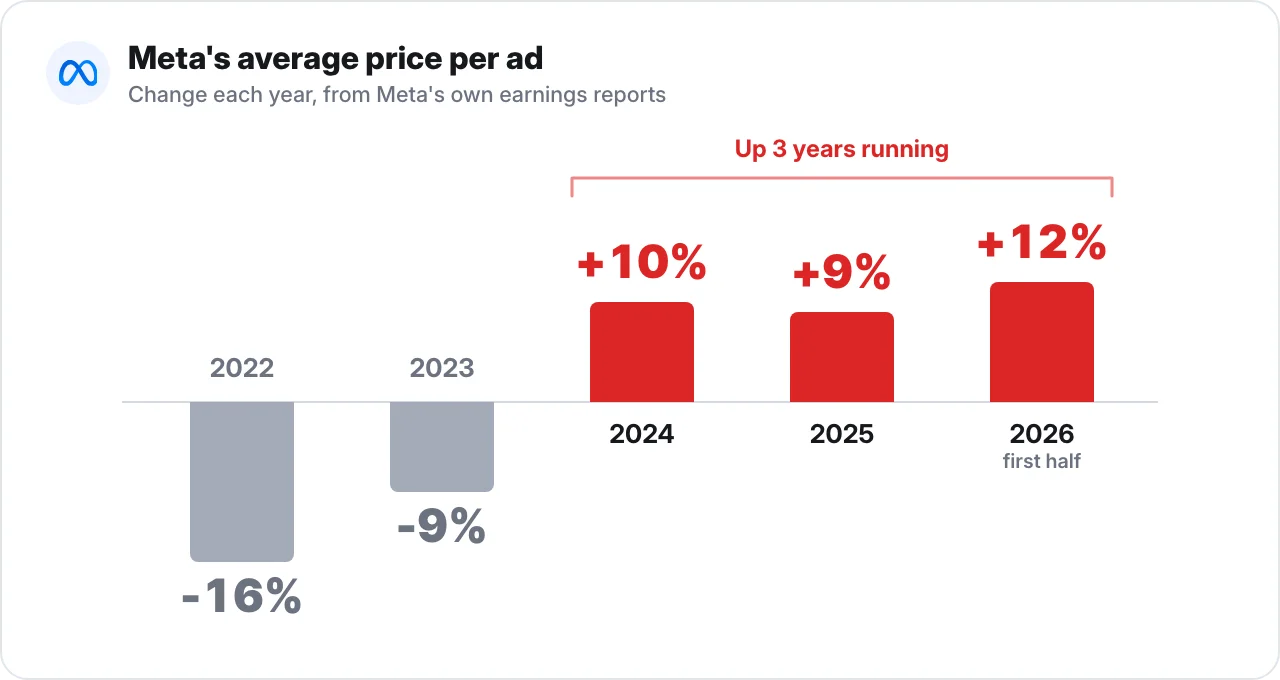
Pretty much because of competition. Meta's average price per ad, from its own earnings reports, dropped 16% in 2022 and 9% in 2023.
Then it rose 10% in 2024, 9% in 2025, and 12% in the first half of 2026.
More advertisers show up every year, and Meta only has so much ad space to sell them. So they bid against each other for the same people, and the price goes up.
But it depends on the niche, because not every niche costs the same. Crowded ones like ecommerce, health and finance pay the most, while Career & Employment and Real Estate leads cost around $12 to $14 on average.
That's for any lead though, and a qualified lead, someone who can actually buy a $300,000 home, costs a lot more. That's why comparing your cost per lead to the overall median doesn't tell you much.
The numbers in the table are the market price. But you can pay way less than the market price, and there are 2 ways how to do it.
Way 1: make ads people actually want to see
Meta wants to show people ads they'll love and engage with, because that keeps them scrolling on Facebook and Instagram.
So when Meta picks which ad to show, it doesn't just look at who bid the most.
It also looks at how good the ad is and how likely that person is to act on it. Which means a better ad can beat a higher bid and still pay less.
So the more people click, watch, comment and buy from your ads, the less you pay for each result. That's one factor.
Way 2: tell Meta who your customers are
The other factor is your tracking setup and the data you send back to Meta. Meta needs to understand who your customers are to be able to find you more of them.
Every time someone buys, becomes a lead or books a call, that event needs to go back to Meta and tell it what a buyer looks like for your business.
When those events are missing, Meta is guessing, and you pay for its guesses.
Meta's own number shows it: advertisers using Conversions API saw at least a 17.8% lower cost per result than those without it.
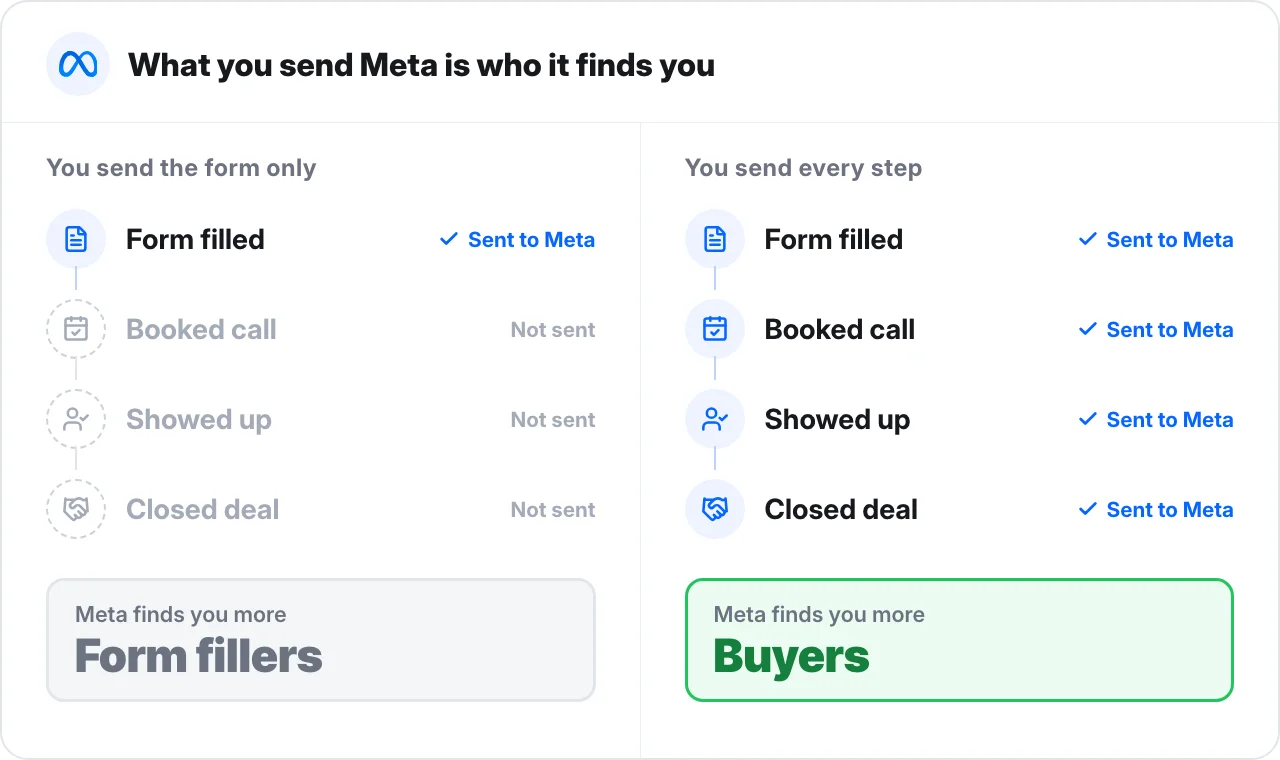
And if you run lead gen, don't stop at the form. Send the booked call, the call where the person showed up, and the closed deal too.
When Meta only sees form fills, it finds you more people who fill in forms, and when it sees who actually bought, it finds you more buyers.
The number you'll actually pay
Back to the table. That's the market price, and it's a fair place to start a budget.
Your price is that number adjusted by 2 things: how much people like your ads, and how well Meta knows who buys from you. Get both right and you end up on the cheaper side of it.